THE NEAR FUTURE
How your day-to-day is about to get a whole lot smoother
Two big shifts are coming, and both of them are about one thing: giving you your time back.
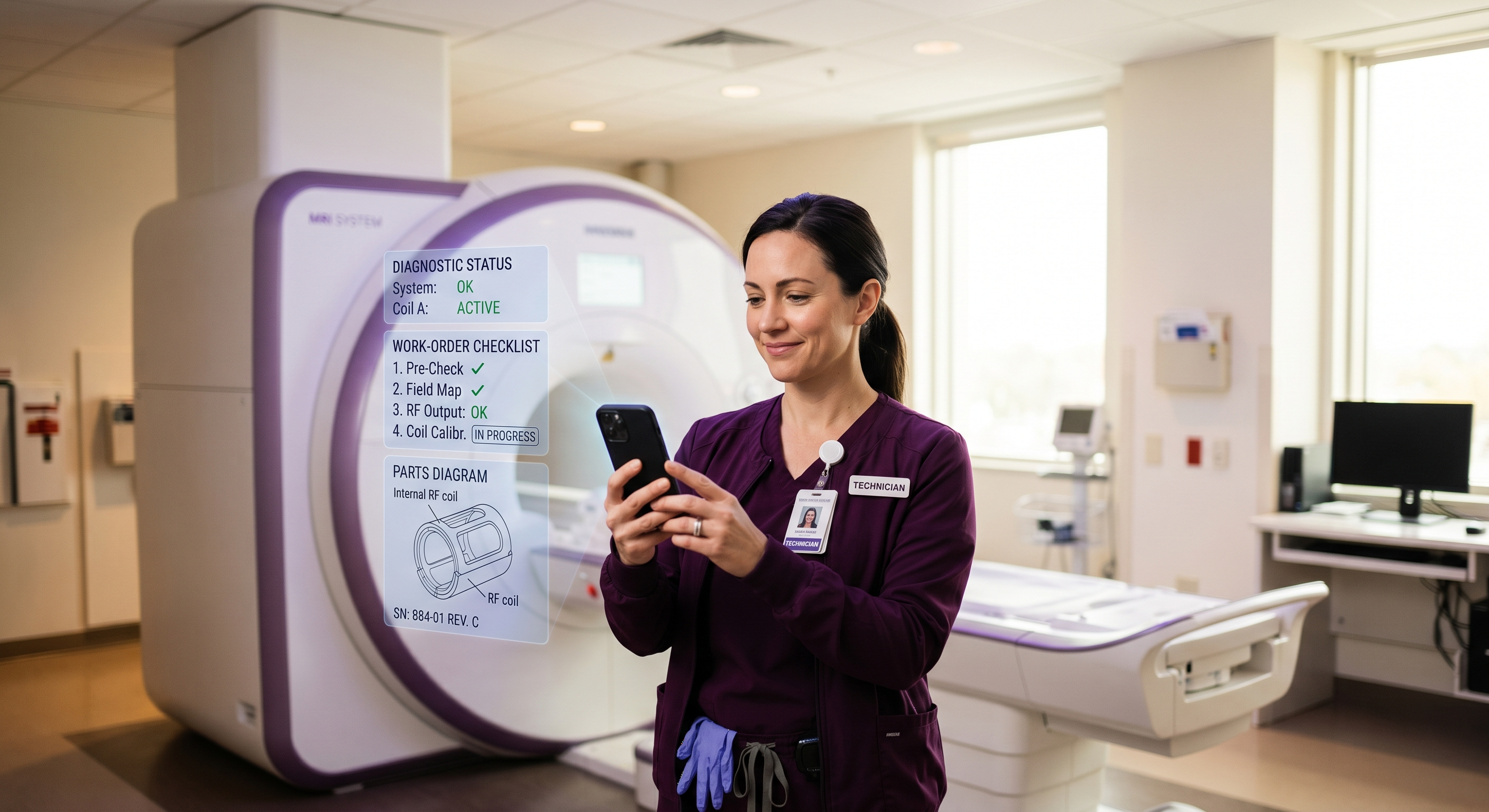
Everything in one place. No more bouncing between three apps to order a part, pull a service menu, or check a history. We're moving toward a single pane of glass — your CMMS becomes the one environment where the work happens, and the tools come to you instead of the other way around.
AI as a partner in the field. Picture this: you're standing at a machine, staring down a failure you've never seen before. You snap a photo. In seconds, the system checks past work orders, surfaces the exact fix that worked last time, finds the parts, and pulls up the manual — right there on your phone or back at your desk.
This isn't a someday idea. The tech is being built right now.
"The tech is ready. Our job is to start thinking of AI not as an extra step, but as a new teammate that helps us get things fixed faster."
THE HORIZON
A whole new professional landscape
Look out toward 2035 and 2040 and the picture gets genuinely exciting. We're not talking about gadgets — we're talking about shifts that free us up to focus on the highest-level work we do.
- 2035 — Smart glasses. Live diagnostics layered right on top of the equipment in front of you, hands-free.
- 2040 — Robotics. Logistics handled automatically, delivering the parts you need straight to your location in the hospital.
- 365M — Preventative scans a year. The goal is millions of preventative scans annually, with AI driving healthcare toward proactive care instead of reactive fixes.
That 365 million number is the one to sit with. It points to a future where preventative MRI screening becomes the norm for everyone — better for patients, and a clear signal that the clinical infrastructure we manage is only going to grow more vital.
THE FOUNDATION
Great tools need great teamwork — starting with clean data
Let's be honest: none of this works on messy data.
This isn't about bureaucracy. It's about working together to make the system smarter. One example shared on the panel said it all — a hospital group where different teams logged the same scope problem as "blockages" on one work order and "leaks" on another. Because the entries weren't standardized, the AI simply couldn't connect the dots and help them.
When we keep our notes consistent, we're training the system to help us later. Standardization is how we unlock the AI features we actually want. So we're building toward tools that fit your real workflow, not the other way around:
- Smarter fields. Requiring specific data — like hours — only for the assets that truly need it, such as vents and X-rays. No more filling out boxes that don't matter.
- Voice-to-text. Document while you work, instead of breaking your rhythm to type.
- Clean data lifts everyone. When ground-level data is solid, it's far easier for managers to advocate for the parts, staffing, and planning the team needs.
The future of clinical engineering isn't a mystery — we know exactly where we're headed. And the teams that lean into these tools now are the ones who'll lead the field forward.
We're working hard to make sure you're ready for all of it. If you've got thoughts on how we can make these tools work better for you, we want to hear them.
Let's talk → cynch.me